
Monitoring Is Not the Same as Operations
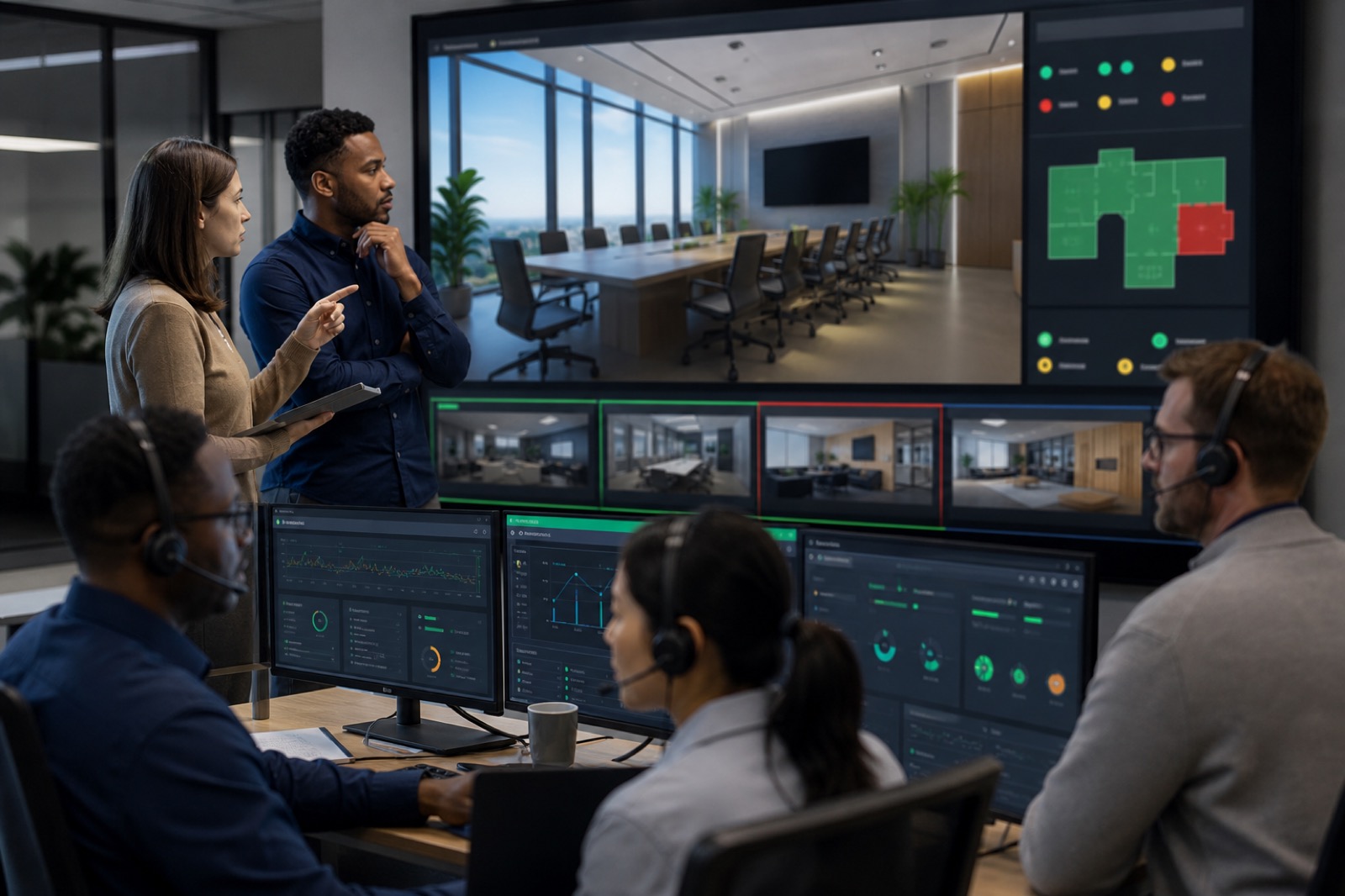
Enterprise rooms now generate more operational data than ever: device status, call quality, room usage, peripheral health, firmware versions, occupancy, platform alerts, and support tickets. That data can help reduce meeting failures. It can also become background noise if no one owns the response.
Managed AV operations is the discipline that turns monitoring into action. It connects room analytics, support workflows, standards, maintenance, and lifecycle planning so teams can prevent issues instead of waiting for the next executive meeting to fail.
Start With the Failures Users Actually Feel
Users do not care that a dashboard was green yesterday. They care that the meeting started on time, the microphone worked, the camera framed the room, the display showed content, and the call joined correctly. A managed operations model should begin with those lived outcomes.
Track failed joins, muted or missing audio, camera issues, display problems, control panel confusion, network quality, and repeat tickets by room. Then group issues by cause: design flaw, user training, device failure, platform change, firmware, network, or support gap. That pattern is where analytics become useful.
Room Standards Need Feedback Loops
Many organizations create room standards and then treat them as static. Managed AV operations should make standards smarter over time. If one microphone approach creates fewer tickets, that should inform the next refresh. If a control layout causes recurring confusion, update the template. If a camera works in small rooms but fails in long rooms, adjust the archetype.
This is especially important as collaboration platforms change. Teams, Zoom, Webex, and device ecosystems evolve through software updates. A room that worked perfectly at launch still needs monitoring, updates, and policy alignment.
Define Who Acts on Each Signal
A room-health alert is useful only if someone knows what to do. Managed operations should define thresholds, response times, escalation paths, maintenance windows, spare strategy, vendor handoff, and communication back to users. Some issues can be fixed remotely. Others require a field visit or planned refresh.
Analytics should also support business decisions. Usage data can show which spaces are overused, underused, or misfit for the way people meet. Ticket data can show which rooms drain support time. Lifecycle data can show which devices should be replaced before they fail.
Move From Reactive Support to Room Reliability
The outcome should be fewer bad meetings, faster recovery, better planning, and more trust in collaboration spaces. That requires AV, UC, IT, facilities, workplace, and support teams to share a common operating model.
VIcom helps enterprises build managed AV operations around room health, analytics, support workflows, standards, and lifecycle planning. Better monitoring is the start. Better operations is the outcome.
Metrics Worth Reviewing Every Month
Start with a short list that maps to user pain. Track failed meeting starts, peripheral disconnects, camera and microphone health, rooms with repeat tickets, average time to recovery, rooms with overdue firmware, and spaces with low or unexpected utilization. These metrics show whether standards are working.
Then add a human review. A dashboard may show that a room is online, but users may still avoid it because the touch panel is confusing or the camera angle makes remote meetings awkward. Pair platform analytics with help desk notes and occasional walkthroughs. The combination is much stronger than either source alone.
Make the Response Model Explicit
Monitoring should trigger known actions. A disconnected camera may create a remote check. A recurring microphone alert may create a site visit. A firmware issue may go into a maintenance window. A room with repeated executive escalations may move up the refresh list. Without those rules, analytics become an archive of known problems.
For large Virginia enterprises with multiple offices, this is where managed operations can protect the user experience. A Richmond room, a Hampton Roads room, and a Northern Virginia room should not require three different support habits unless the business case is clear. Standard monitoring and escalation help distributed teams feel like one environment.
Turn Analytics Into a Refresh Argument
Room analytics become more persuasive when they connect to budget decisions. A room with a high ticket rate, frequent failed starts, and heavy utilization deserves a different conversation than a lightly used room with one aging display. Data helps leaders see where refresh dollars reduce operational pain rather than simply replacing old hardware.
The same logic applies to managed services. If support teams can show that proactive monitoring reduced repeat tickets or caught device failures before board meetings, managed operations becomes easier to defend. The metric should not be “we have a dashboard.” The metric should be fewer disrupted meetings, faster recovery, and clearer lifecycle planning.
One useful monthly habit is a top-five room review. Identify the five rooms creating the most support friction, decide what action each needs, and assign an owner. Some will need training. Some need firmware. Some need design changes. Some need replacement. That small operating rhythm keeps analytics connected to action.
Do not overlook adoption patterns. A room with low utilization may be in the wrong location, but it may also have a reputation problem. Users remember the room that failed during a client call. Managed operations should include a path to restore confidence after the technical fix, whether that means user communication, quick retraining, or a visible room refresh.
That review should include at least one person outside the AV team. Workplace, facilities, or an executive assistant may explain why users avoid a room even when monitoring says the devices are healthy. That context keeps analytics grounded in behavior.
If room monitoring is producing alerts but not fewer failures, the operating model needs work. VIcom can help connect analytics, support workflows, and refresh planning into managed AV operations; connect with VIcom by filling out the form below.