
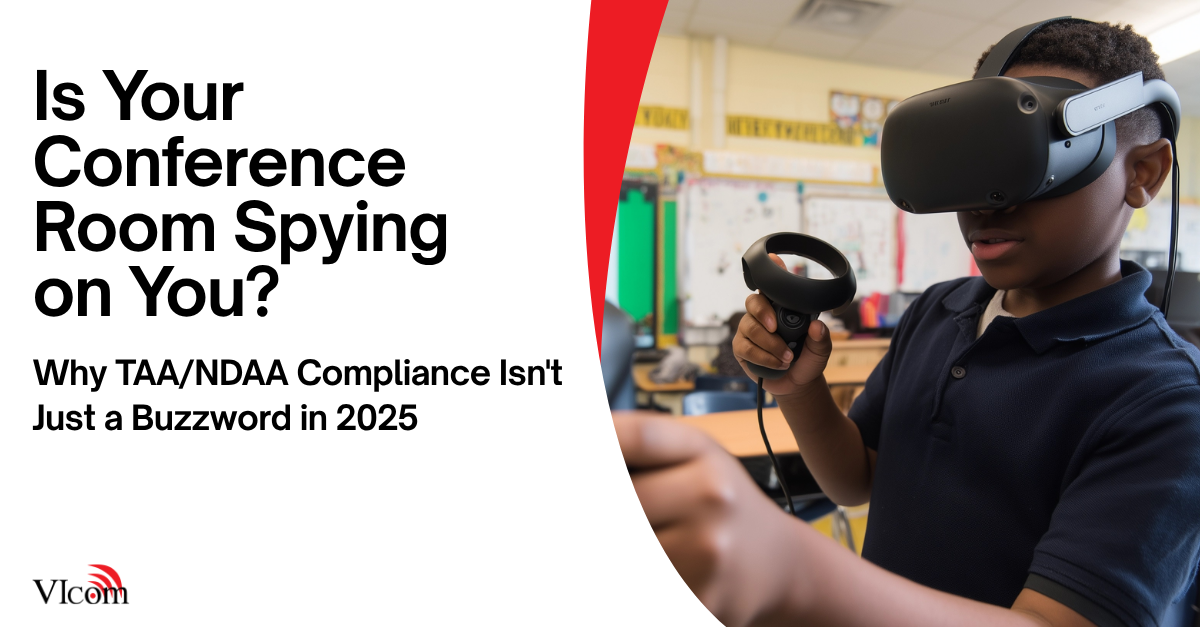
You’ve seen the videos. Students with VR headsets on, mouths agape, “walking” through ancient Rome or manipulating a 3D model of a human heart. The marketing promises a revolution in learning, a level of engagement you’ve only dreamed of.
And yet, if you’re like most school leaders, a voice in the back of your head is asking some tough questions:
- Is this just another expensive fad that will end up in a closet next to the dusty smartboards?
- With budgets getting tighter, can I justify this cost over hiring another teacher or buying new textbooks?
- Will my teachers, who are already stretched thin, actually use this?
Let’s be honest. You’re not just buying technology; you’re making a bet on the future of your school. And you deserve a straight answer, free of the usual sales hype.
So let’s talk frankly about what spatial computing and AR/VR in the classroom really looks like in 2025: the good, the bad, and the real, measurable return on investment.
The Big Question: How Much Does an AR/VR Program Really Cost?
The first number everyone sees is the price of the headset. But that’s like judging the cost of a car by the price of one tire. It’s dangerously misleading.
If you’re serious about this, you need to budget for the Total Cost of Implementation, which includes:
1. The Hardware: Yes, the headsets. But not just the devices themselves. You need secure, ventilated charging carts that can handle 30 devices at once. You need durable cases. You need replacement controllers for the ones that will inevitably be dropped.
2. The Software & Content: This is the big one. A headset without content is a paperweight. Are you paying for annual subscriptions per device? Are you buying one-time licenses for specific apps? High-quality educational content isn’t free, and the costs can quickly add up.
3. Network Infrastructure: Thirty students simultaneously downloading a high-resolution virtual field trip will bring a weak Wi-Fi network to its knees. Before you buy a single headset, you need to assess if your wireless access points can handle the massive bandwidth and low latency required.
4. Mobile Device Management (MDM): You can’t manage 30, 60, or 100 headsets manually. You need a robust MDM platform to push updates, install apps, and lock down devices. This is a non-negotiable recurring cost.
5. Professional Development: Here’s the single biggest point of failure. If you just hand teachers a box of headsets, they will fail. You must invest in real, ongoing training that shows them how to integrate this into their curriculum, not just how to turn it on.
The Bottom Line: A single “classroom set” can easily run you tens of thousands of dollars when you factor in the entire ecosystem. Anyone who tells you otherwise is not giving you the full picture.
The Problems No One Wants to Talk About
We’ve seen schools dive in headfirst, only to run into brick walls they never saw coming. Before you sign a purchase order, you need to have a plan for these common, but rarely discussed, problems:
Problem #1: The “Cool Factor” Wears Off Fast
In week one, students are thrilled. By week four, if the content isn’t genuinely enhancing their learning, the novelty disappears. VR becomes just another screen, and an uncomfortable one at that. The lesson? Technology for technology’s sake is a waste of money. The content and pedagogy must be rock-solid.
Problem #2: Teacher Resistance Is Real
Your most experienced teachers didn’t go into education to become tech support specialists. If the technology adds complexity to their already overwhelming workload without clear instructional benefits, they won’t use it. Period. You need to make the case for why this makes their jobs easier or their teaching more effective, not just why it’s “innovative.”
Problem #3: Hygiene and Health Concerns
Thirty students sharing headsets means you need a hygiene protocol. Face cushions need to be cleaned or replaced regularly. Some students will experience motion sickness or discomfort. You need clear policies, parental consent forms, and a plan for students who can’t participate.
Problem #4: Equity and Access
If only your advanced STEM classes get access to VR, you’re creating a two-tier system. How do you ensure equitable access across all grade levels and demographics? This isn’t just a logistical question, it’s an ethical one.
Problem #5: The Maintenance Nightmare
Devices break. Software updates fail. Controllers go missing. Batteries die. If you don’t have dedicated technical support, either in-house or through a reliable partner, your expensive investment will become a source of constant frustration for teachers and IT staff alike.
So Where’s the Real ROI? When Does This Actually Make Sense?
Here’s where we get honest. AR/VR is not a magic bullet, but in the right circumstances, with the right support, it can deliver measurable value.
AR/VR Makes Sense When:
1. You’re Teaching Concepts That Are Impossible or Impractical in the Real World
Want to show students the inside of a volcano? Walk them through the International Space Station? Let them manipulate molecular structures in 3D? These are experiences that would cost tens of thousands of dollars to replicate in person, or are literally impossible. Here, VR isn’t a gimmick; it’s the most effective tool available.
2. You Have Strong Teacher Champions
Don’t try to force this on everyone. Find 2-3 passionate teachers who are willing to be early adopters and curriculum developers. Let them prove the model, refine the implementation, and then evangelize to their peers. Organic, teacher-led adoption is far more sustainable than top-down mandates.
3. You Have Committed Technical and Instructional Support
This is non-negotiable. Someone needs to own this program, not as a side project, but as a real responsibility. This person needs to handle device management, troubleshooting, content curation, and ongoing teacher training.
4. You Measure What Matters
Don’t just count how many students used the headsets. Track learning outcomes. Are test scores improving in the units where VR is used? Are students more engaged in class discussions afterward? Are they retaining information better? Use data to prove (or disprove) the value, and be willing to pivot if it’s not working.
AR/VR May Not Be Worth It If:
- You’re seeing it primarily as a recruitment or PR tool rather than a genuine instructional improvement
- Your network infrastructure is already struggling with basic needs
- You don’t have buy-in from your instructional leadership team
- Your budget would be better spent on more fundamental needs like teacher salaries, classroom supplies, or building maintenance
A Practical Path Forward: Start Small, Prove Value, Then Scale
If you’re intrigued but cautious (which you should be), here’s a sensible approach:
Phase 1: Pilot Program (Year 1)
- Start with one classroom set (10-15 devices) in a single department or grade level
- Choose content that addresses a known instructional pain point
- Invest heavily in teacher training and support
- Collect data on student engagement, learning outcomes, and teacher satisfaction
Phase 2: Evaluate and Refine (Year 1-2)
- Be ruthlessly honest about what’s working and what isn’t
- Adjust your content library, training program, and technical support based on real feedback
- Share success stories and student work with the broader school community
Phase 3: Strategic Expansion (Year 2-3)
- Only scale if the data supports it
- Expand to departments or subjects where the ROI is clearest
- Build a sustainable model for ongoing maintenance, content licensing, and professional development
The Bottom Line
AR/VR in education is not a fad, but it’s also not a silver bullet. In 2025, the technology is mature enough to deliver real instructional value, if you go in with your eyes wide open, a realistic budget, strong support systems, and a commitment to measuring what matters.
The schools that succeed with spatial computing are the ones that treat it as a strategic instructional tool, not a shiny object. They start small, prove value with data, and scale thoughtfully.
The schools that fail are the ones that buy the hardware, skip the training, ignore the infrastructure needs, and wonder why the headsets end up collecting dust.
Which path will your school choose?
VIcom partners with schools to design and implement education technology solutions that actually get used. From network assessments to teacher training to ongoing technical support, we help ensure your investment in AR/VR delivers real instructional value, not just impressive demos. Ready to explore if spatial computing is right for your school? Let’s have an honest conversation.