
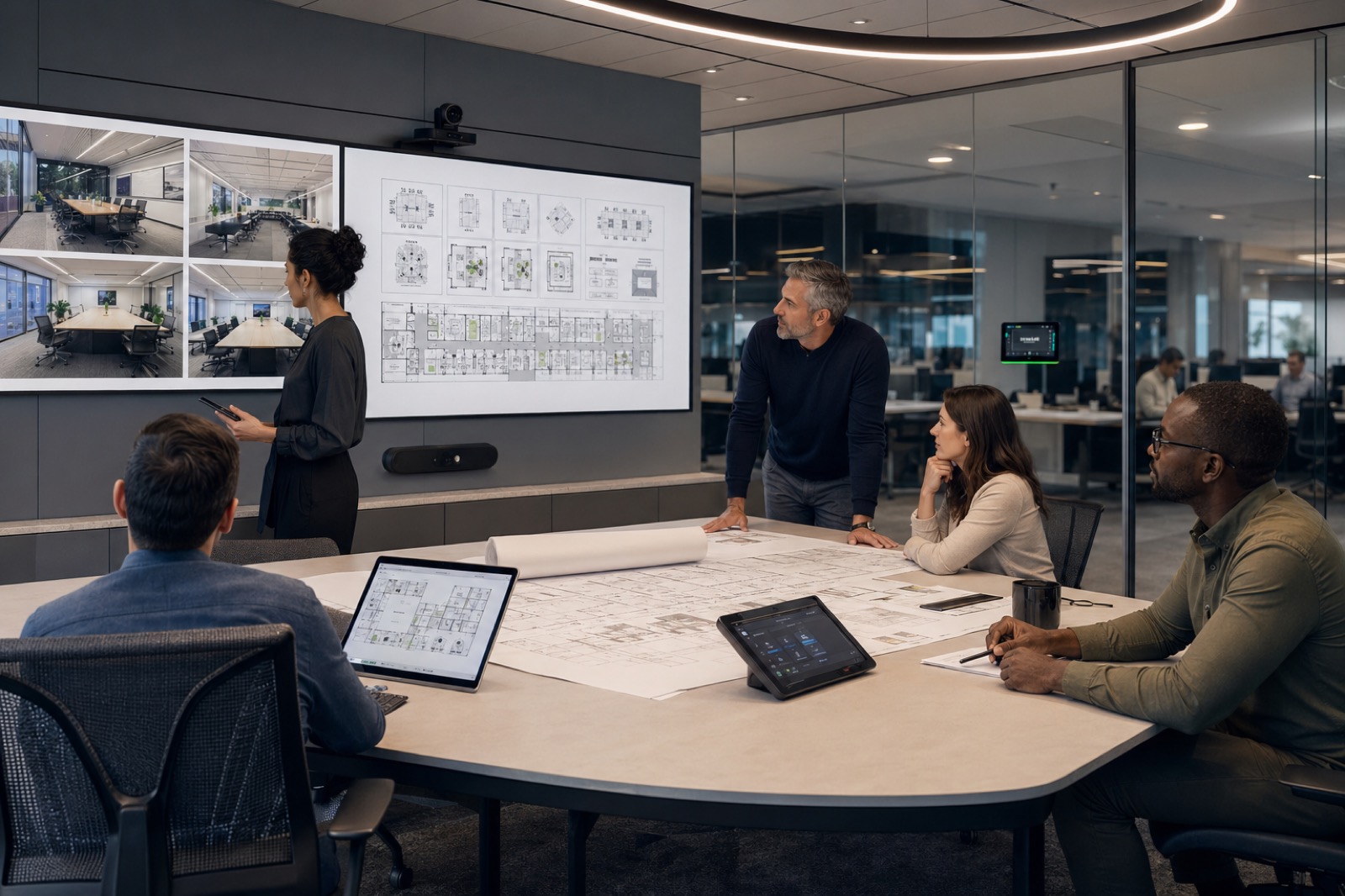
The Debrief Matters More Than the Show Floor
InfoComm gives AV and UC buyers a flood of new ideas during and immediately after the show: AI meeting experiences, enterprise deployment at scale, AV over IP, broadcast workflows, learning spaces, analytics, cloud management, and cross-platform collaboration. The challenge starts when the team gets home. Which ideas deserve budget, which need a pilot, which need governance, and which should wait?
A useful InfoComm 2026 debrief should turn themes into decisions. Buyers do not need a longer trend list. They need a practical way to update standards, plan refreshes, and reduce operational risk.
AI Collaboration Needs a Room Readiness Plan
AI-powered meeting experiences are a major collaboration theme, but enterprises should resist turning them into a feature hunt. The stronger move is to audit rooms for clean audio, useful camera coverage, predictable controls, platform policy, privacy, and support health. AI assistants depend on the quality of the meeting they observe.
The action item is a readiness scorecard. Identify pilot rooms, standard rooms, executive rooms, and training spaces. Test transcripts, summaries, speaker attribution, camera behavior, and user trust. Then decide which rooms are ready, which need refresh, and which should not enable AI features yet.
AV over IP Requires Network Alignment Early
AV over IP and AV/IT convergence are not new, but enterprise scale makes the planning more serious. Buyers should come back from InfoComm asking about bandwidth, multicast, QoS, VLANs, security zones, switch features, documentation, monitoring, and support ownership. These questions belong at the beginning of a refresh.
The action item is a joint AV and network workshop before procurement. Map traffic types, room types, redundancy needs, lifecycle support, and troubleshooting ownership. Lab testing or a pilot room can prevent late change orders and finger-pointing.
Managed Operations Should Be a Budget Category
As rooms become more software-defined and analytics-rich, the support model becomes part of the solution. Dashboards do not create value unless someone reviews them, acts on them, and improves standards based on what the data shows. Managed room health, firmware governance, adoption reporting, and refresh planning should be discussed with the same seriousness as hardware.
The action item is to define operating metrics. Track room uptime, failed meetings, device health, ticket patterns, meeting-start issues, and user adoption. Use that data to prioritize refreshes instead of reacting only to complaints.
Turn Trends Into a 90-Day Plan
A practical debrief ends with a short plan: what to pilot in the next 30 days, what to standardize in 60, and what to budget or govern in 90. AI rooms, AV over IP, corporate broadcast spaces, learning spaces, and managed operations can all fit that model. The key is not to do everything at once.
VIcom can help buyers translate InfoComm ideas into room standards, readiness assessments, network planning, pilots, and lifecycle support. The value is in deciding what should become real in your environment and what should stay on the watch list.
Debrief While the Details Are Still Fresh
Schedule the internal debrief before the team leaves for the show or before the exhibit-hall notes disappear into inboxes. Give each attendee one job: capture three ideas worth piloting, three risks to investigate, and three vendor claims that need proof. That keeps the conversation from becoming a tour of interesting booths.
The debrief should separate categories. AI meeting features belong in a room-readiness discussion. AV over IP belongs with network architecture. Broadcast and town hall ideas belong with communications workflows. Managed operations belongs with support metrics and lifecycle planning. When everything stays in one trend bucket, nothing becomes actionable.
A 30-60-90 Day Conversion Plan
- First 30 days: score current rooms against the themes that matter most, such as AI readiness, monitoring visibility, and networked AV risk.
- By 60 days: choose one pilot. Do not pilot a feature in a room that already has audio, lighting, or control problems.
- By 90 days: update the standard, budget, governance note, or support model based on what the pilot proved.
This plan gives executives something clearer than “we saw interesting technology.” It shows what will change, why it matters, and what evidence the team will use before scaling.
What to Ignore After the Show
A strong debrief also needs a “not now” list. Some tools will be impressive but too early for the organization. Some will require governance the team has not written. Some will solve a problem the business does not actually have. Naming those items is not negativity; it protects budget and keeps the roadmap focused.
Use three filters. First, does the technology solve a pain users already report? Second, can IT and AV support it with current staffing and monitoring? Third, does the organization have the policy maturity to use it responsibly? If the answer is no, put the idea on a watch list instead of a purchase list.
The show-floor energy can make every trend feel urgent. The debrief should slow the decision just enough to turn excitement into a testable plan. One good pilot with clear measures is more valuable than five disconnected experiments that never become standards.
Also decide who owns vendor follow-up. If every attendee takes separate calls, the organization hears fifteen sales stories instead of one buying strategy. A single owner can ask vendors for proof tied to the pilot plan: room requirements, network impact, support model, security documentation, and referenceable deployments.
One final filter helps: assign each idea to a decision type. Some ideas need a room standard change, some need a security review, some need a network lab test, and some need executive sponsorship. Labeling the decision type keeps the debrief from becoming a list of interesting products.
After InfoComm, turn the show-floor takeaways into one practical pilot and one standards update. VIcom can help translate AV and UC trends into a roadmap your rooms, network, and support team can actually carry; connect with VIcom by filling out the form below.